
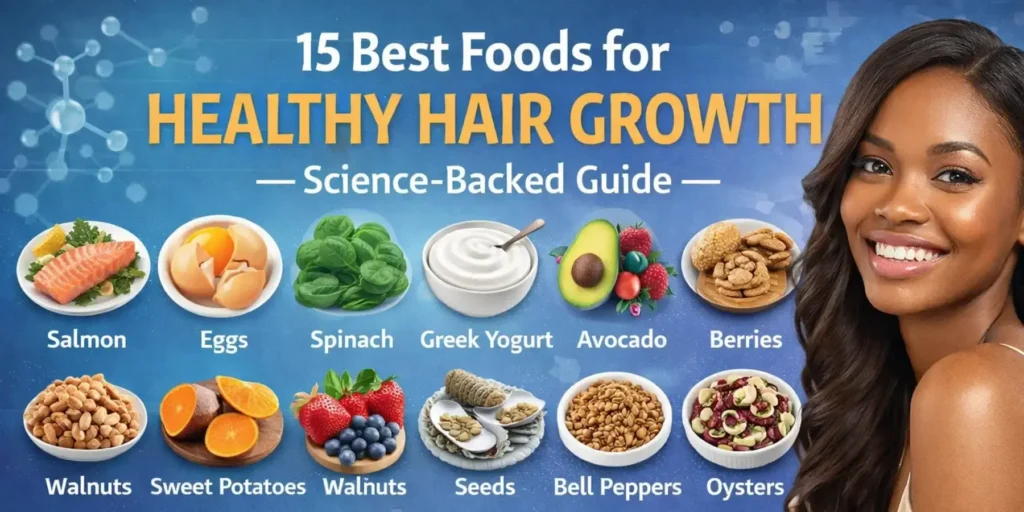
If you’re dealing with thinning hair or shorter, coarser hair strands, the answer often starts in your kitchen. Hair thickness, growth rate, and how long each strand stays healthy are shaped by the nutrients you consume. A deficiency in even one key nutrient can show up as visible hair loss months later.
In plain terms: hair grows from living follicles that rely on a steady supply of protein, vitamins, minerals, and fats. No shampoo routine or cosmetic treatment can substitute for a nutrient-rich diet.
This guide covers the 15 best foods for hair growth – all chosen because they address the most common nutritional deficiencies that dermatologists see in patients with thinning hair. Most are already common in Indian diets. The rest are accessible and affordable.
How Diet Affects Your Hair – The Science
Before diving into the foods, you need to understand how nutrition connects to hair loss. Hair follows a predictable growth cycle, and this cycle depends entirely on the nutrients available to the follicle.
The Hair Growth Cycle and Nutrition
Hair grows in three phases:
Anagen (Growth Phase) – This is the active growing phase, lasting two to seven years. During anagen, the hair follicle is actively dividing and producing new hair cells. This phase requires constant supply of protein, biotin, iron, zinc, and B vitamins. A nutrient deficiency during anagen causes weaker, thinner hair to form.
Catagen (Transition Phase) – The follicle shrinks and detaches from blood supply. This lasts one to three weeks. Minimal nutrients are used during this phase.
Telogen (Resting Phase) – The hair rests and eventually sheds. This lasts two to four months. This is when you see hair on your pillow or in the shower.
The critical point: when you are deficient in key nutrients, anagen phase shortens. Your hair spends less time growing and more time in telogen. What you see as sudden hair loss is typically a nutritional deficiency that began three to six months earlier.
Which Nutrients Actually Matter for Hair?
Dermatologists focus on six core nutrients when assessing hair loss related to diet:
Protein – Hair is made of keratin, a protein. Without adequate protein, hair becomes thin and breaks easily.
Iron – Low iron causes telogen effluvium, where hairs prematurely enter the shedding phase.
Zinc – Essential for follicle cell division and DHT regulation (covered in our DHT blockers guide).
Biotin (B7) – Supports keratin production and hair strength.
Vitamin D – Regulates hair follicle cycling and immune function in the scalp. Vitamin D in Northern Europe: Why Supplementation Matters More Than You Think and Why taking vitamin D3 without K2 is a mistake.
Omega-3 Fatty Acids – Reduce scalp inflammation and support blood circulation.
Miss one of these, and hair loss follows within months.
“I see patients every week who have optimized their shampoo routine but neglected their nutrition. They ask why expensive treatments are not working. The answer is usually sitting on their plate – or rather, what is not on their plate. Nutrition is the foundation. Everything else builds on top of it.” – Dr. Abhishek Pilani
15 Best Foods for Hair Growth
This is a practical list. Every food below is accessible, affordable, and backed by research. This is not a list of exotic superfoods – it is real food from your local market. Safe essential oil usage for hair and scalp can complement dietary strategies.
1. Eggs
Key Nutrients: Protein, biotin, iron, zinc, selenium Complete protein for keratin production. Biotin strengthens hair structure. Iron prevents telogen effluvium. How to include: 1-2 eggs daily (boiled, scrambled, or in curries).
2. Spinach
Key Nutrients: Iron, zinc, magnesium, folate, vitamins A-K Iron prevents hair loss. Zinc regulates sebum. Folate supports cell division. How to include: Add to cooked vegetables, dal, eggs, or blend in smoothies.
3. Amla (Indian Gooseberry)
Key Nutrients: Vitamin C, antioxidants, minerals Highest vitamin C fruit in India. Supports collagen formation. Prevents oxidative stress on follicles. How to include: 1 fresh fruit daily, amla powder in cooking, amla juice (20ml diluted).
4. Curry Leaves
Key Nutrients: Protein, calcium, iron, antioxidants Contains beta-carotene and antioxidants. Traditionally used to strengthen hair. How to include: Add to daily cooking or tempering oil.
5. Coconut (Fresh/Oil)
Key Nutrients: Lauric acid, protein, iron, magnesium Lauric acid penetrates the hair shaft. Consumption supports follicle health. How to include: Use coconut oil for scalp massage. Add fresh coconut to curries. Use in cooking.
6. Lentils/Dal
Key Nutrients: Protein, iron, zinc, biotin, folate Plant-based complete protein. Iron prevents hair shedding. Readily absorbed when combined with vitamin C. How to include: Include in daily meals – minimum 1 bowl cooked dal per day.
7. Sweet Potato
Key Nutrients: Beta-carotene, vitamin C, manganese, potassium Beta-carotene converts to vitamin A. Supports sebum production. Aids nutrient absorption. How to include: Boil, roast, or add to curries 2-3 times weekly.
8. Almonds
Key Nutrients: Biotin, magnesium, copper, zinc, selenium One of the richest biotin sources. Copper aids melanin production for hair color. How to include: Soak 10-12 almonds overnight and eat with breakfast.
9. Fatty Fish (Salmon, Mackerel)
Key Nutrients: Omega-3, protein, vitamin D, selenium Omega-3 reduces scalp inflammation. Vitamin D regulates hair cycle. Protein builds hair structure. How to include: 2-3 times weekly (150g). Substitute with flaxseeds in vegetarian diets.
10. Pumpkin Seeds
Key Nutrients: Zinc, magnesium, omega-3, iron Zinc inhibits DHT conversion. Pumpkin seed oil increases hair density in clinical studies. How to include: Handful daily (raw or roasted, unsalted).
11. Berries (Blueberry, Strawberry)
Key Nutrients: Vitamin C, antioxidants, anthocyanins Antioxidants protect follicles from oxidative damage. Vitamin C aids collagen production. How to include: Fresh berries when seasonal. Dried berries year-round.
12. Avocado
Key Nutrients: Biotin, vitamin E, healthy fats, magnesium Biotin supports keratin. Vitamin E reduces oxidative stress. Fats aid nutrient absorption. How to include: 1-2 per week. Substitute with coconut or sesame oil if not available.
13. Soybeans/Tofu
Key Nutrients: Complete protein, iron, zinc, isoflavones Plant-based protein. Bioavailable iron. Isoflavones may support hormonal balance. How to include: Soya chunks in curries. Tofu 2-3 times weekly.
14. Carrots
Key Nutrients: Beta-carotene, vitamin K, antioxidants, biotin Beta-carotene improves scalp health. Antioxidants reduce follicle inflammation. How to include: Raw (grated in salad) or cooked in curries.
15. Greek Yogurt (or Dahi)
Key Nutrients: Protein, calcium, probiotics, vitamin B5, vitamin D Complete protein. B5 (pantothenic acid) strengthens hair. Probiotics improve nutrient absorption. How to include: 1-2 cups daily (plain, unsweetened) or with berries.
The most effective approach is not eating one “superfood” daily – it is rotating these foods throughout your week so you cover all nutrient bases consistently.
“I recommend patients build their diet around these 15 foods rather than chasing expensive supplements. The nutrient bioavailability from whole foods is superior, and the cost is a fraction of most hair supplements. A diet rich in eggs, dal, spinach, amla, and almonds covers nearly every nutritional base for healthy hair.” – Dr. Abhishek Pilani
Essential Nutrients for Hair Growth – Daily Targets
Protein
Recommended: 1.2-1.6g per kg of body weight daily Sources: Eggs, dal, soybeans, Greek yogurt, fish
Biotin (Vitamin B7)
Recommended: 30 mcg daily (standard); 2.5-5mg for hair health support Sources: Almonds, eggs, sweet potato, avocado, carrots
Iron
Recommended: 8mg for men; 18mg for pre-menopausal women daily Sources: Spinach, lentils, eggs, curry leaves, pumpkin seeds
Zinc
Recommended: 8-11mg daily Sources: Pumpkin seeds, lentils, almonds, eggs, spinach
Vitamin D
Recommended: 600-800 IU daily (1,000-2,000 IU for hair health) Sources: Greek yogurt, eggs (yolk), fatty fish, sunlight exposure
For more on optimizing vitamin D intake, see Vitamin D in Northern Europe: Why Supplementation Matters More Than You Think.
Omega-3 Fatty Acids
Recommended: 1.1-1.6g daily Sources: Fatty fish, flaxseeds, pumpkin seeds, walnuts
Vitamin C
Recommended: 75-90mg daily Sources: Amla (highest), berries, spinach, carrots, sweet potato
The practical takeaway: if you include eggs, lentils, spinach, amla, and almonds daily – and rotate in other foods from the list weekly – you will likely meet all nutrient targets naturally. For more on optimizing vitamin D intake, see Vitamin D in Northern Europe: Why Supplementation Matters More Than You Think.
Foods That Cause Hair Loss – What to Avoid
High Sugar and Refined Carbohydrates
Sugar causes blood sugar spikes, triggering insulin surges that increase DHT (the hormone most responsible for male pattern baldness). Regular consumption of sugary foods, pastries, refined bread, and aerated drinks accelerates hair loss in genetically predisposed individuals.
Action: Replace white rice with brown rice, whole wheat, or millet. Eliminate sugary beverages entirely.
Processed and Ultra-Processed Foods
Processed foods often contain hydrogenated oils and high sodium, which increase inflammation throughout the body – including the scalp. Inflammation restricts blood flow to hair follicles.
Action: Minimize packaged snacks, processed meats, fried foods, and instant noodles.
Excess Alcohol
Alcohol interferes with nutrient absorption, depletes B vitamins (especially biotin), and increases DHT production. Regular heavy drinking accelerates hair loss.
Action: Moderate or eliminate alcohol. If you consume alcohol, increase B-complex vitamins and hydration.
Crash Diets and Rapid Weight Loss
When you lose more than 1 kg per week, your body enters nutritional stress. Hair follicles – which are not essential for survival – are deprioritized. This triggers telogen effluvium (widespread shedding) three to six months after the diet ends.
Action: Aim for gradual weight loss (0.5-1kg per week maximum). Never skip meals to lose weight faster.
Excess Vitamin A
While beta-carotene (which converts to vitamin A) is beneficial, excessive preformed vitamin A is toxic to hair follicles. Some supplements contain 10,000+ IU when the daily limit is 3,000 IU.
Action: Avoid high-dose vitamin A supplements. Beta-carotene from foods (carrots, sweet potato, spinach) is safe because your body converts only what it needs.
Sample Hair Growth Diet Plan – One Day
Here is a practical one-day meal plan that incorporates multiple foods from the list above.
Breakfast (7-8 AM)
2 boiled eggs + 1 slice whole wheat toast
1 cup fresh amla juice (diluted) or 1 fresh amla fruit
10-12 soaked almonds
1 cup plain Greek yogurt or dahi
Mid-Morning Snack (10-11 AM)
1 medium sweet potato (boiled or roasted)
Handful (30g) pumpkin seeds
Lunch (12:30-1:30 PM)
1 bowl moong dal or masoor dal (cooked)
1 bowl spinach (cooked) with 1 tsp coconut oil
1 small bowl brown rice or millet
1 medium carrot (raw or cooked)
Afternoon Snack (4 PM)
Small bowl fresh berries (seasonal)
1 cup coconut water
Dinner (7-8 PM)
150g fatty fish (salmon, mackerel) or 200g soya chunks curry
1 bowl homemade dal with curry leaves
1 medium bowl mixed vegetable curry (with spinach, carrots, pumpkin)
1 small whole wheat roti
Hydration: Drink 3-4 litres of water throughout the day. Proper hydration supports nutrient transport to hair follicles.
This plan is flexible. Rotate vegetables weekly, swap fish for soya chunks if vegetarian, adjust portions to your caloric needs. The goal is consistency – following a nutrient-rich diet for at least three to six months before expecting visible improvements.
When Diet Alone Is Not Enough
Here is the honest truth: for some people, dietary optimization alone will not stop hair loss. This is true for three main reasons:
Genetic Predisposition – If male or female pattern baldness runs in your family, your follicles are sensitive to DHT regardless of your nutrition. Diet helps, but it is not a complete solution.
Advanced Hair Loss – If you are already at an advanced stage, the follicles in affected areas may be dormant. No food can resurrect them.
Underlying Medical Conditions – Sometimes hair loss signals thyroid dysfunction, hormonal imbalance, or autoimmune disease. These require medical treatment, not just dietary change.
When to Consult a Dermatologist
If you have followed a hair-growth diet for three to six months and hair loss continues, it is time to consult a qualified dermatologist. Evidence-based options include:
DHT Blockers – Prescription DHT blockers like finasteride or topical options work synergistically with diet for genetic hair loss.
Supplements – Biotin (5,000-10,000 mcg daily), saw palmetto extract (320mg daily)