There is a version of you that remembers what it felt like to operate at full capacity. Not just physically. Mentally. Emotionally. The version that recovered faster, thought clearer, moved with purpose, and did not have to bargain with his own motivation to get through the afternoon.
If that version feels like a distant memory, you are not alone. And you are not broken. You are likely dealing with low testosterone, a condition that affects an estimated 1 in 4 men over 30, according to clinical data. The medical term is hypogonadism. The lived experience is something far less clinical: it is waking up feeling like you are running on reserve power every single day.
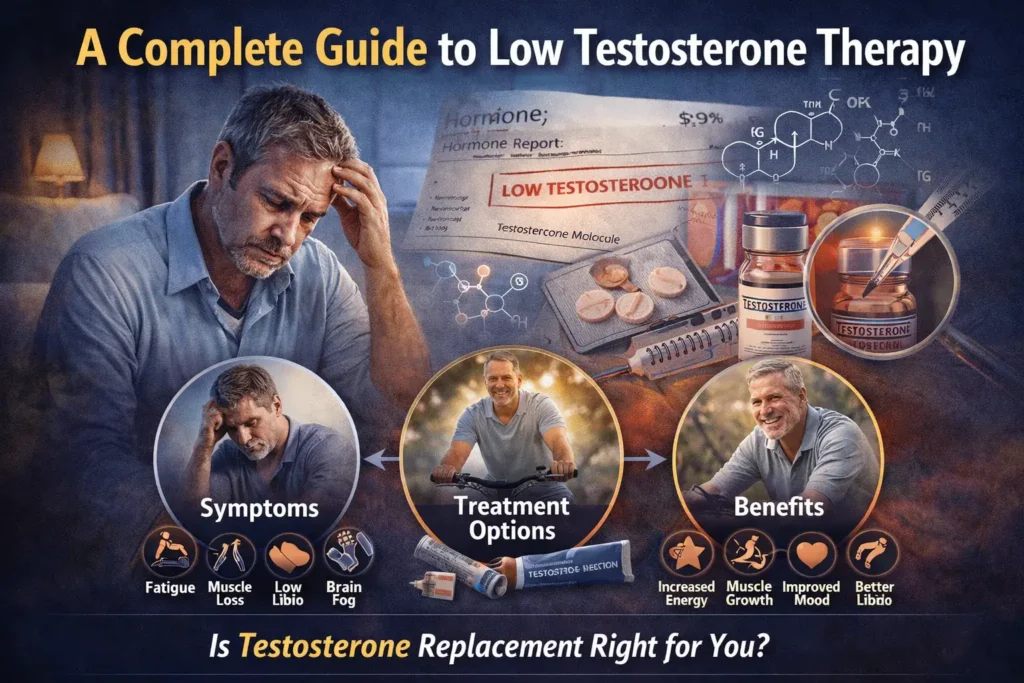
This guide covers what testosterone replacement therapy (TRT) actually involves, who it is for, what the science says, and how to approach it with the seriousness it deserves.
Understanding the Drop
Testosterone production peaks in your late teens and early twenties, then declines at approximately 1% per year after age 30. For some men, this decline stays within a manageable range. For others, it drops below the threshold where the body can compensate, and symptoms begin stacking.
The Mayo Clinic notes that low testosterone can manifest as reduced sexual desire, fewer spontaneous erections, infertility, increased body fat, reduced muscle bulk and strength, decreased bone density, swollen breast tissue, body hair loss, diminished energy, and emotional changes including depression and difficulty concentrating.
That is not a single symptom. That is a full-system disruption. And it is why TRT has become one of the most researched and rapidly growing areas of men’s medicine.
What TRT Actually Is
Testosterone replacement therapy restores testosterone levels to a healthy, functional range using exogenous testosterone. It is not about pushing levels to supraphysiological extremes. It is about bringing your endocrine system back to a baseline where you can function, recover, and perform the way your body was designed to.
TRT is available in several delivery methods, each with distinct advantages:
- Injectable testosterone (cypionate or enanthate) remains the most common and cost-effective option. Administered weekly or biweekly, it provides consistent absorption and predictable blood levels when dosed properly.
- Topical gels and creams are applied daily to the skin and absorbed transdermally. They offer steady-state delivery but require consistency and caution around skin-to-skin contact with others.
- Subcutaneous pellets are implanted under the skin every 4 to 7 months. They provide the longest duration of action and consistent testosterone release.
- Nasal gels and oral formulations are newer options that offer convenience but may have less predictable absorption profiles compared to injectables or pellets.
The right delivery method depends on your lifestyle, your lab work, and your provider’s clinical judgment. There is no universal best option.
The Evidence: What TRT Can and Cannot Do
A comprehensive review in the PMC database found that TRT in hypogonadal men is associated with improvements in sexual desire and erectile function, energy and mood, lean body mass and muscle strength, bone mineral density, erythropoiesis, and cognitive function.
Dose-related increases in skeletal muscle mass have been documented, along with increased lipid oxidation, which improves overall body composition. Frailty, a major concern for aging men, has been shown to slow under TRT, with patients reporting meaningful improvements in daily function and quality of life.
But TRT is not a magic bullet. It requires medical supervision, regular bloodwork, and ongoing monitoring.
Potential side effects include elevated hematocrit levels, changes in cholesterol, acne, and in some cases, mood fluctuations during dosage adjustments. A qualified provider will monitor for these and adjust protocols accordingly.
Getting Started the Right Way
If you suspect low testosterone, the path forward starts with testing, not guessing. Proper diagnosis requires fasting blood draws taken in the early morning on two separate occasions, using the same laboratory for consistency.
Key markers to evaluate include:
- Total testosterone
- Free testosterone
- Estradiol
- SHBG (sex hormone-binding globulin)
- LH (luteinizing hormone)
- Complete blood count
- PSA (for men over 40)
- Metabolic panel
These markers give a full picture of where your hormones stand and help differentiate between primary and secondary hypogonadism.
From there, a qualified provider will design a protocol tailored to your physiology, monitor your progress at 3 to 6 month intervals, and make adjustments based on both lab data and symptom resolution.
Beyond the Prescription: The Lifestyle Component
TRT works best when it is part of a comprehensive approach, not when it is used as a substitute for foundational health habits.
Resistance training, quality sleep, stress management, and a nutrient-dense diet all amplify the effects of therapy. Supplements targeting zinc, magnesium, vitamin D, and omega-3 fatty acids can further support the endocrine environment your body needs to make the most of treatment.
Men who treat TRT as one tool in a complete system see the best outcomes. Men who treat it as the only tool tend to plateau.
Reclaim What Was Always Yours
Low testosterone is not a sentence. It is a diagnosis with a clear, evidence-based treatment pathway.
The men who get the best results are the ones who stop waiting, get tested, and build a plan with a provider who takes this as seriously as they do.
You do not have to keep running on reserve. The energy, the clarity, the drive you remember is not gone. It is suppressed. And there is a proven way to bring it back.
Contact T1Rx.
FAQs
Is TRT a lifelong commitment?
For most men with clinical hypogonadism, yes. Exogenous testosterone suppresses the body’s natural production over time, which means discontinuing therapy typically results in a return of symptoms.
That said, treatment protocols can evolve, and some men may taper or adjust under medical guidance depending on their circumstances.
How quickly will I notice results from TRT?
Clinical research suggests that improvements in libido generally appear within 3 to 6 weeks. Energy, mood, and body composition changes typically emerge over 3 to 6 months.
Full benefits, including improvements in bone density and metabolic markers, may take 12 months or longer to fully manifest.
Are there natural alternatives to TRT?
For men with mildly low levels, lifestyle interventions like resistance training, weight loss, improved sleep, and targeted supplementation can raise testosterone meaningfully.
For men with clinically significant hypogonadism, these interventions support but rarely replace medical therapy. The right approach depends entirely on your lab work and symptom severity.
Book your initial consultation with T1Rx today and take the first step toward expert care and reliable solutions tailored to your needs.
Author Name: T1Rx
Author Bio: T1Rx are all former Special Forces military guys and are approaching it from a human optimization standpoint rather than general health improvement.