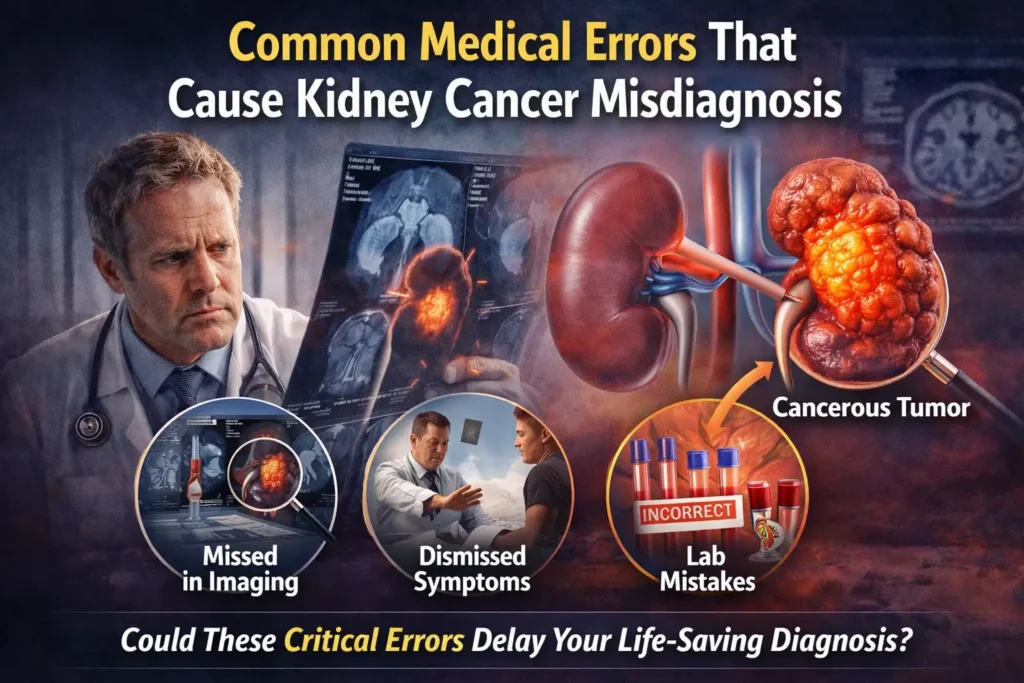
Kidney cancer can be difficult to diagnose because its symptoms resemble those of more common conditions like kidney stones or urinary infections. Misdiagnosis can delay treatment and worsen outcomes. Recent data show that thousands of people are diagnosed with kidney cancer each year, underscoring the importance of accurate diagnosis and timely care. To learn how early detection and preventive care can reduce cancer risk, see the article on early detection and preventive care.
With kidney cancer having similar symptoms to kidney stones and urine infections, there are cases when this disease is misdiagnosed.
Because kidney cancer symptoms often mimic kidney stones or urinary infections, misdiagnosis remains a risk.
When clinicians lack complete information for an accurate diagnosis, patients bear the consequences.
Knowing how misdiagnoses can occur and how to advocate for yourself is vital for timely care.
Let’s discuss the common medical errors that can result in kidney cancer misdiagnosis.
Misinterpretation of Imaging Studies
Misinterpretations of imaging studies by doctors can significantly delay kidney cancer diagnosis. Waiting for results can provoke frustration and fear, especially when health is at stake.
Imaging tests such as CT scans and MRIs are essential to determine whether a tumor is present. Misreading these studies or concluding falsely that a lesion is benign can prevent timely treatment and may allow a life-threatening condition to progress. This is a reminder that cancer signaling research emphasizes the need for precise diagnostics and accurate imaging interpretation (cancer signaling research).
A medical malpractice attorney in Shreveport, LA notes that such errors can damage professional reputations, but for lawyers who handle your case, your future is important. Medical malpractice considerations.
Always advocate for your health and get a second opinion if you suspect something is off. You are entitled to have information concerning your health accurately delivered.
Failure to Recognize Risk Factors
Several risk factors for kidney cancer should be discussed with a doctor. Family history of cancer, especially a history of kidney cancer, high blood pressure, or obesity can increase risk. Because symptoms are often vague, proactively sharing your concerns and health history at every visit helps your clinician assess risk more accurately.
Advocating for yourself and providing an up-to-date health history helps your physician consider risk factors and tailor testing accordingly.
Overlooking Subtle Symptoms
Minor symptoms can be easy to overlook during medical evaluations. Subtle changes—such as new or persistent pain, fatigue, weight loss, or blood in the urine—may indicate kidney cancer in its early stages. Tracking these signals and mentioning them to your clinician can help bridge the information gap. For broader guidance on recognizing cancer symptoms and seeking timely care, see the article Breast Cancer: Symptoms, Causes, Stages, Treatment & Prevention.
Such a relationship, where you are allowed to share your observations and concerns, can evolve into something valuable if there are issues you feel are serious. Your opinion always matters, and paying attention to the smallest details could lead to early detection of kidney cancer.
Inadequate Communication Among Healthcare
Poor communication among healthcare providers can lead to significant misdiagnosis rates in conditions such as kidney cancer.
When essential information about a patient’s health is not shared between providers, it becomes impossible to have a complete view of the patient’s state of health.
For instance, if a primary care doctor fails to relay symptoms or test results to a specialist, important references may get lost.
Clear, coordinated communication within a healthcare team helps ensure correct diagnosis and effective management.
Delayed Referral to Specialists
A delayed referral to highly specialized care can significantly hinder the accurate diagnosis and management of kidney cancer. This occurs when a general practitioner does not refer a patient in time for follow-up imaging to a urologist or an oncologist.
Delays can be frustrating since you are seeking help, yet the doctor may not act promptly. The amount of time to obtain appropriate medical care can influence future treatment choices.
Advocate for yourself by voicing concerns and requesting a referral. Make multiple calls if needed. Timely access to specialists can be a definite net gain for your treatment outcomes. For more on the importance of early detection and proactive care, see the article on early detection and preventive care.