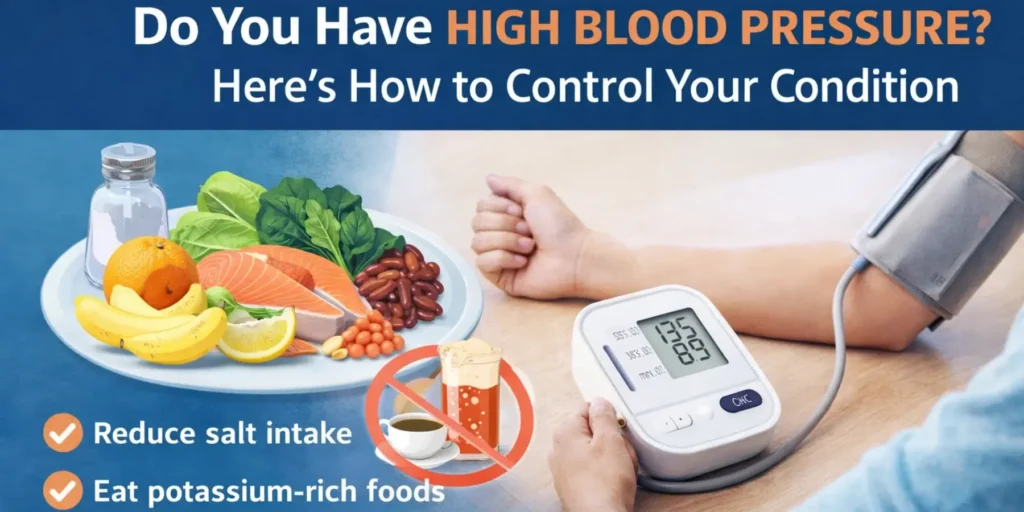
High blood pressure (hypertension) affects nearly half of adults worldwide, and many people don’t even know they have it. Almost half of American adults suffer from high blood pressure. Because it often has no obvious symptoms, it is commonly called the “silent killer.”
If you’ve been diagnosed with high blood pressure, don’t panic. The good news is that lifestyle changes can significantly lower your blood pressure and reduce your risk of heart attack, stroke, and other serious health problems.
Below are the most effective and science-backed lifestyle changes to help you control high blood pressure naturally.
1. Reduce Your Salt (Sodium) Intake
Salt plays a major role in raising blood pressure. When you consume too much sodium, your body retains extra fluid, which increases pressure on your blood vessel walls.
Over time, this can lead to consistently high blood pressure and damage to your heart and arteries.
Common Hidden Sources of Salt
- Canned soups and sauces
- Deli meats and sausages
- Frozen meals and fast food
- Packaged snacks and chips
- Some breads and cereals
How to Reduce Salt in Your Diet
- Check nutrition labels and choose low-sodium options
- Cook at home more often
- Use herbs, garlic, lemon juice, and spices instead of salt
- Avoid processed and packaged foods
Your taste buds will adjust within a few weeks, and you’ll enjoy food without excess salt.
2. Eat More Potassium-Rich Foods
Potassium helps counteract the effects of sodium and relaxes blood vessel walls, which lowers blood pressure naturally.
Best Potassium-Rich Foods
- Bananas
- Oranges and citrus fruits
- Spinach and leafy greens
- Beans and lentils
- Sweet potatoes
- Avocados
Adding one or two servings of potassium-rich foods daily can make a noticeable difference in your blood pressure levels.
Important: If you have kidney disease or take certain medications, consult your doctor before increasing potassium intake.
It’s also worth remembering that high blood pressure doesn’t always show up alone. It is linked to weight gain, inactivity, and even chronic elevated glucose levels. All of these places additional strain on blood vessels. Improving your diet – in whatever way you can – supports multiple aspects of your health all at once.
3. Limit Alcohol and Caffeine Intake
Many people overlook beverages when managing blood pressure, but what you drink matters.
Alcohol and Blood Pressure
Drinking alcohol frequently or in large amounts can raise blood pressure and damage the heart. Reducing alcohol consumption—even slightly—can improve your readings.
Caffeine and Blood Pressure
Caffeine can cause temporary spikes in blood pressure. Drinking multiple cups of coffee daily may keep your blood pressure elevated.
Tips to Reduce Alcohol and Caffeine
- Limit alcohol to moderate levels or avoid it
- Reduce coffee gradually instead of quitting suddenly
- Replace one coffee with herbal tea or water
Additional Lifestyle Tips to Control High Blood Pressure
- Exercise regularly: 30 minutes of walking or light exercise daily helps lower blood pressure.
- Maintain a healthy weight: Losing even a small amount of weight reduces blood pressure.
- Manage stress: Meditation, deep breathing, and good sleep improve heart health.
- Quit smoking: Smoking damages blood vessels and increases heart disease risk.
Final Thoughts
Managing high blood pressure is not about perfection—it’s about consistency. Small daily changes can lead to major improvements in your health over time.
By reducing salt, eating potassium-rich foods, and limiting alcohol and caffeine, you can significantly lower your blood pressure and protect your heart.
If you have consistently high readings, consult a healthcare professional for proper diagnosis and treatment.
Frequently Asked Questions (FAQs)
What is considered high blood pressure?
Blood pressure above 130/80 mmHg is generally considered high.
Can lifestyle changes alone control high blood pressure?
Yes, many people can reduce their blood pressure with diet, exercise, and stress management, but some may still need medication.
How fast can blood pressure decrease with lifestyle changes?
Some improvements can be seen within a few weeks, but long-term consistency is required for lasting results.
Is high blood pressure curable?
It is usually manageable but not always completely curable. Many people live healthy lives with proper control.
Which foods should I avoid with high blood pressure?
Avoid processed foods, salty snacks, sugary drinks, fast food, and excessive red meat.