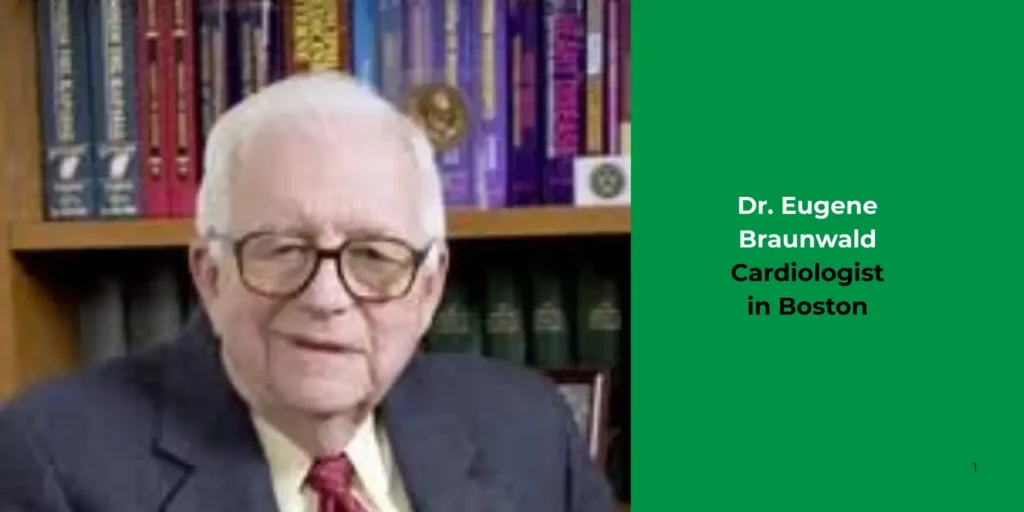
Dr. Eugene Braunwald is one of the most influential cardiologists in modern medical history, based in Boston, Massachusetts, USA. Widely recognized as a pioneer of contemporary cardiovascular medicine, he has made groundbreaking contributions to the understanding, diagnosis, and treatment of heart disease. With decades of clinical practice, research leadership, and academic excellence, Dr. Braunwald is often described as one of the founding figures of modern cardiology.
Early Life and Medical Education
Dr. Eugene Braunwald was born on August 15, 1929, in Vienna, Austria. His family later moved to the United States, where he pursued his medical education. He earned both his undergraduate degree and Doctor of Medicine (MD) from New York University. After graduation, he completed his residency training in internal medicine at Johns Hopkins Hospital, one of the leading medical institutions in the world.
Professional Career and Academic Leadership
Throughout his remarkable career, Dr. Braunwald has held several prestigious leadership roles in cardiology and academic medicine. He served as Chief of Cardiology and Clinical Director at the National Heart, Lung, and Blood Institute (NHLBI), where he helped shape cardiovascular research programs in the United States.
In 1972, he moved to Boston and became Chairman of the Department of Medicine at Brigham and Women’s Hospital, a position he held until 1996. He also became the Distinguished Hersey Professor of Medicine at Harvard Medical School, one of the highest academic honors in medicine.
Major Contributions to Cardiology
Dr. Eugene Braunwald’s research transformed the understanding of heart disease and significantly improved patient survival worldwide. Some of his most important contributions include:
• Demonstrating that heart attacks are progressive events and that early treatment can save heart muscle
• Advancing the scientific understanding of heart failure and coronary artery disease
• Identifying mechanisms of hypertrophic cardiomyopathy
• Developing modern approaches to managing acute myocardial infarction
• Establishing large-scale clinical trials that shaped evidence-based cardiology
His work helped introduce treatments that reduce heart damage after a heart attack and improved outcomes for millions of patients globally.
TIMI Study Group and Research Excellence
Dr. Braunwald founded the Thrombolysis in Myocardial Infarction (TIMI) Study Group at Brigham and Women’s Hospital. This research organization conducted numerous landmark clinical trials that changed how cardiologists treat acute coronary syndromes and cardiovascular emergencies.
Over his career, he has authored more than 1,000 peer-reviewed scientific publications and is considered one of the most frequently cited researchers in cardiology.
Medical Publications and Textbooks
Dr. Braunwald is the founding editor of the internationally famous cardiology textbook Braunwald’s Heart Disease, regarded as one of the most authoritative references in cardiovascular medicine. He also served for many years as an editor of Harrison’s Principles of Internal Medicine, a globally recognized medical textbook used by physicians and students.
Awards and Honors
Due to his extraordinary contributions, Dr. Braunwald has received numerous international awards and recognitions, including:
• Distinguished Scientist Awards from major cardiology organizations
• Warren Alpert Foundation Scientific Prize
• Multiple honorary doctoral degrees from universities worldwide
• Election to the United States National Academy of Sciences
• Lifetime achievement recognitions from leading cardiovascular societies
Many experts and Nobel Prize winners have credited him as one of the individuals who contributed the most to cardiology in modern times.
Teaching and Mentorship
Beyond research and clinical care, Dr. Braunwald is celebrated as an exceptional teacher and mentor. He trained generations of cardiologists who later became global leaders in cardiovascular medicine. His mentorship legacy continues through academic awards named in his honor.
Practice and Affiliation
Dr. Eugene Braunwald has been closely associated with Harvard Medical School and Brigham and Women’s Hospital in Boston, institutions known worldwide for excellence in cardiovascular care, medical education, and research innovation.
FAQs About Dr. Eugene Braunwald
Who is Dr. Eugene Braunwald?
Dr. Eugene Braunwald is a world-renowned cardiologist in Boston, USA, known for pioneering research that shaped modern cardiovascular medicine.
What is Dr. Braunwald famous for?
He is famous for discovering that heart attacks are progressive and treatable events, helping develop therapies that reduce heart muscle damage and improve survival.
Where does Dr. Eugene Braunwald work?
He has been affiliated with Harvard Medical School and Brigham and Women’s Hospital in Boston, Massachusetts.
What are Dr. Braunwald’s specialties?
His expertise includes coronary artery disease, heart failure, myocardial infarction, cardiovascular physiology, and clinical cardiology research.
Has Dr. Braunwald written medical books?
Yes, he is the founding editor of the famous cardiology textbook “Braunwald’s Heart Disease” and contributed extensively to major internal medicine textbooks.
Why is Dr. Braunwald important in cardiology?
His research established many modern principles of heart disease treatment and evidence-based cardiology, influencing medical practice worldwide.
How many research publications has Dr. Braunwald produced?
He has authored more than 1,000 scientific publications, making him one of the most cited cardiologists in medical history.