Updated: March, 2026
Adolescence is a critical window for lifelong oral health. Between the ages of 10 and 19, permanent teeth settle into place, jaws continue developing, and hygiene habits become self-directed. While many families associate braces with cosmetic improvement, straight teeth during the teenage years are about far more than appearance. Proper alignment plays a direct role in oral hygiene, bite function, speech development, and long-term dental stability.
Understanding why alignment matters during adolescence can help parents and teens make informed decisions about orthodontic care and preventive dentistry.
The Unique Oral Health Challenges of Adolescence
Teenagers face a combination of biological and behavioral factors that increase their risk for dental issues:
- Hormonal changes that make gums more sensitive and prone to inflammation
- Increased independence in oral hygiene routines
- Higher consumption of sugary drinks and processed foods
- Participation in sports and activities that may increase dental trauma
When teeth are misaligned, these risk factors become amplified. Crowded, rotated, or overlapping teeth create tight spaces that are difficult to clean thoroughly. Over time, this can contribute to plaque buildup, cavities, and gum disease.
Straight teeth are not just easier to brush and floss. They reduce the likelihood of chronic oral health problems that can extend well into adulthood.
Improved Oral Hygiene and Lower Risk of Decay
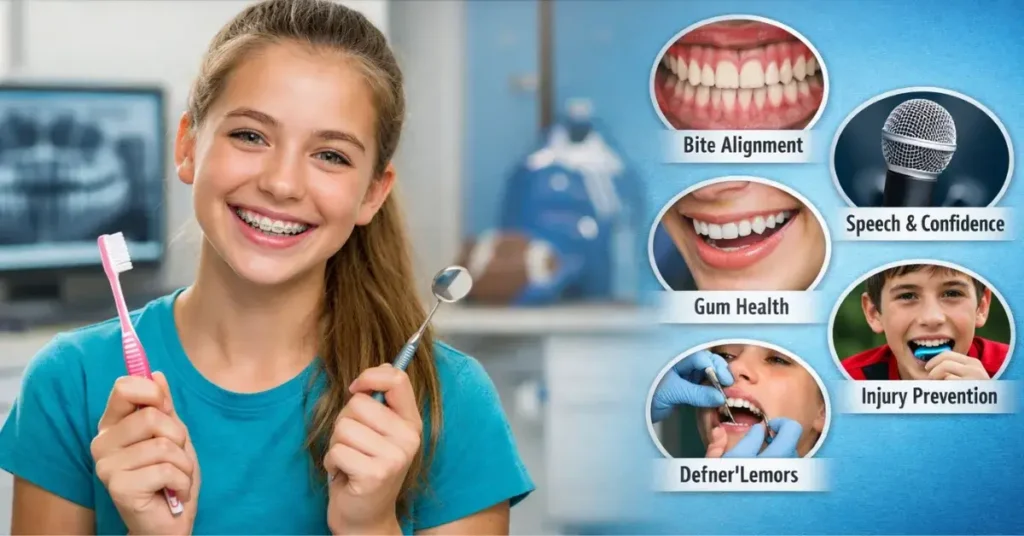
One of the most significant functional benefits of orthodontic treatment is improved cleanability. Crooked or crowded teeth trap food debris and plaque in areas that toothbrush bristles and floss struggle to reach.
During adolescence, when dietary habits may not always be ideal, this becomes especially important. Studies consistently show that malocclusion (misaligned bite) is associated with a higher incidence of dental caries and gingivitis.
When teeth are aligned properly:
- Plaque removal becomes more effective
- Gum inflammation is easier to control
- Risk of early periodontal disease decreases
- Long-term dental costs may be reduced
These preventive benefits often outweigh the purely cosmetic considerations that many people initially focus on.
Proper Bite Alignment and Jaw Health
Teeth are designed to work together in a precise way. When the upper and lower teeth do not align properly, the result can be more than an uneven smile.
Common bite issues during adolescence include:
- Overbite
- Underbite
- Crossbite
- Open bite
- Severe crowding
If left untreated, these conditions can lead to:
- Uneven tooth wear
- Increased risk of fractures or chipping
- Jaw pain and tension
- Headaches
- Temporomandibular joint (TMJ) dysfunction
Correcting alignment during the teenage years takes advantage of ongoing jaw growth. Orthodontic intervention at this stage is often more efficient and stable compared to waiting until adulthood.
Families considering treatment may benefit from consulting an experienced orthodontist in Stafford, VA or their local orthodontic provider to evaluate how growth patterns may influence timing and approach.
Speech Development and Clarity
Alignment issues can sometimes interfere with speech clarity. Certain malocclusions, especially open bites or severe spacing, may affect pronunciation of sounds such as “s,” “z,” or “th.”
During adolescence, communication skills become increasingly important for academic performance and social development. While not every misalignment causes speech concerns, correcting structural irregularities can support clearer articulation when necessary.
Speech improvements are often an overlooked benefit of orthodontic treatment.
Reduced Risk of Dental Trauma
Protruding front teeth are more vulnerable to injury. Adolescents involved in contact sports or physical activities may face higher risk of dental trauma if their teeth extend outward significantly.
Orthodontic treatment that brings teeth into proper alignment can reduce the likelihood of fractures or avulsions (complete displacement of a tooth). When combined with appropriate use of mouthguards, alignment correction enhances overall dental protection.
Long-Term Periodontal Stability
Gum health during adolescence lays the groundwork for adulthood. Chronic inflammation during teenage years can contribute to early periodontal issues.
When teeth are straight:
- Forces from chewing are distributed more evenly
- Gum tissue fits more securely around each tooth
- Bone support remains more stable over time
Misalignment can create areas where gums are constantly irritated or where excessive bite pressure leads to recession. Early correction helps establish a healthier environment for long-term periodontal stability.
Psychological and Social Confidence
While this article emphasizes functional health, it would be incomplete without acknowledging the emotional component.
Adolescence is a formative period for self-image. Dental misalignment can sometimes contribute to self-consciousness or reluctance to smile. While orthodontic care should never be framed purely as cosmetic, improved alignment often enhances confidence and willingness to engage socially.
Confidence gained during adolescence can positively influence:
- Classroom participation
- Social interactions
- Public speaking
- Overall self-esteem
When functional health and confidence improve together, the benefits extend well beyond the teenage years.
Timing Matters: Why Adolescence Is Ideal for Treatment
Orthodontic treatment during adolescence is often recommended because:
- Most permanent teeth have erupted
- Jaw growth is still ongoing
- Bone tissue responds more readily to movement
- Treatment time may be shorter than in adults
Early assessment allows dental professionals to monitor development and intervene at the most appropriate time. In some cases, interceptive treatment in childhood may be recommended before full adolescent orthodontics.
Parents who notice crowding, bite irregularities, or speech concerns should consider scheduling an evaluation with a qualified orthodontic professional to determine whether immediate treatment or periodic monitoring is best.
Modern Orthodontic Options for Teens
Today’s orthodontic care offers more flexibility than ever. Adolescents may have access to:
- Traditional metal braces
- Ceramic (tooth-colored) braces
- Clear aligners designed specifically for teens
- Self-ligating bracket systems
The choice depends on case complexity, lifestyle factors, and patient preference. Advances in digital imaging and 3D treatment planning have also improved precision and predictability.
Importantly, treatment is no longer solely about achieving straight front teeth. Comprehensive orthodontics focuses on full bite correction, airway considerations, and long-term stability.
Building Lifelong Oral Health Habits
Orthodontic treatment during adolescence often reinforces better oral hygiene practices. Regular adjustment appointments encourage:
- Consistent brushing and flossing
- Increased awareness of dietary habits
- Ongoing professional monitoring
These habits frequently carry into adulthood, contributing to healthier smiles decades later.
Conclusion
Straight teeth during adolescence are about much more than aesthetics. Proper alignment supports effective hygiene, reduces risk of decay and gum disease, protects against trauma, improves bite function, and promotes long-term dental stability.
While cosmetic improvements are visible and motivating, the true value of orthodontic care lies in preventive health and functional balance. Adolescence presents an optimal opportunity to guide dental development in a way that supports lifelong oral wellness.
Families seeking guidance should consult a qualified orthodontic professional to assess growth patterns, alignment, and overall oral health needs. Investing in alignment during these formative years is an investment in health, comfort, and confidence for the future.