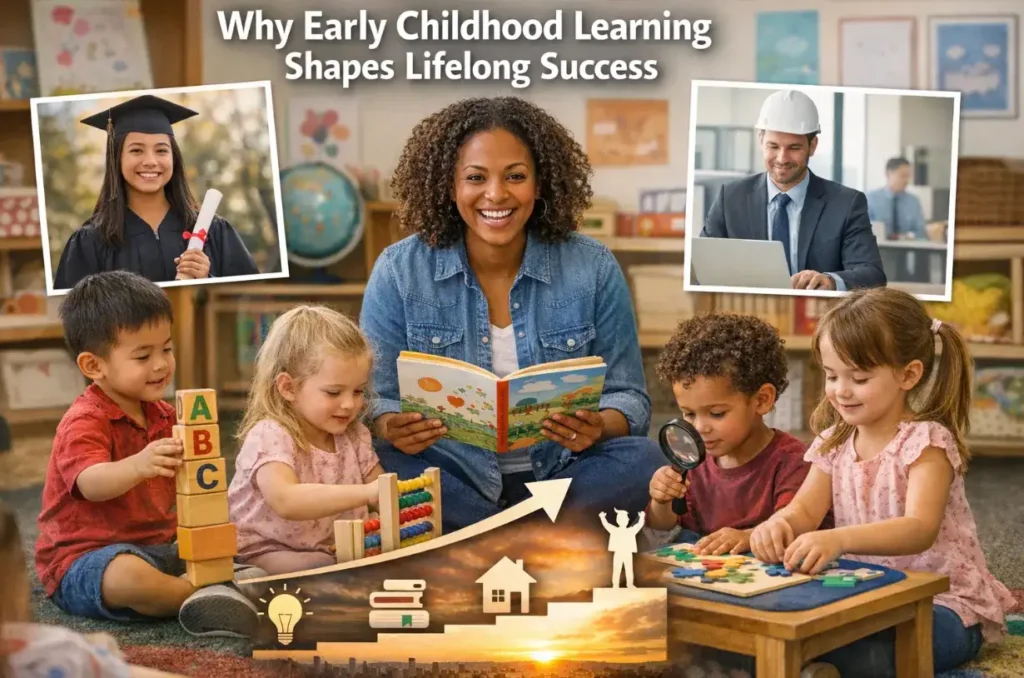
Early childhood learning is far more than just a series of early lessons — it is the cornerstone of a child’s entire educational journey. The first five years of a child’s life are critical, laying the foundation for future success both in and out of the classroom.
Research consistently shows that children who participate in early learning programmes experience stronger cognitive, emotional, and social development.
For example, a study by the National Institute for Early Education Research found that children who attend high-quality preschool programmes are more likely to perform better academically in later years. These early experiences shape everything from academic achievement to behaviour and overall wellbeing, influencing a child’s ability to thrive in school and beyond.
The Vital Role of Early Childhood Learning
The first few years of a child’s life are marked by rapid growth, particularly in brain development. During this crucial period, the brain forms neural connections at an astonishing rate — up to one million new connections every second.
This intense neuroplasticity means that the experiences and interactions children have early on can significantly shape their future development.
For instance, children exposed to rich and stimulating environments during their early years often demonstrate stronger cognitive abilities and better problem-solving skills later in life.
Early Childhood Education (ECE) is critical during this time, offering the structured environment and experiences needed to foster both cognitive and emotional growth. With the right support, children can develop foundational skills that help them thrive academically and socially.
Brain Development and Cognitive Skills
Research in neuroscience shows that the early years of a child’s life are essential for brain development. Children’s brains are highly receptive to the world around them, meaning that experiences — whether positive or negative — can leave lasting impressions.
Early childhood learning programmes take advantage of this neuroplasticity to support healthy developmental pathways.
The development of cognitive skills such as language, memory, attention, and reasoning begins during these early years. Infants and toddlers who experience stimulating and diverse learning environments often show faster brain development.
This development can lead to improved memory, better problem-solving abilities, and stronger learning capacity. Activities such as storytelling, music, and creative play also support critical thinking and analytical skills that form the foundation for future academic success.
Social and Emotional Development
The early childhood years are equally important for social and emotional growth. During this stage, children begin developing essential life skills such as building relationships, understanding emotions, and interacting with others.
Research suggests that children who participate in early learning programmes often develop stronger social skills, increased empathy, and improved cooperation.
In early education environments, children interact with peers and educators, allowing them to practice communication, sharing, teamwork, and conflict resolution.
These experiences prepare children for future classroom environments and social situations. Many early learning programmes also focus on developing resilience, emotional regulation, and self-confidence, helping children face challenges and setbacks with greater confidence.
Early Learning Programmes That Make a Difference
A well-structured early learning programme can create a powerful foundation for lifelong success. The right combination of nurturing environments, skilled educators, and engaging activities ensures children develop the skills needed to succeed.
Several programmes focus specifically on supporting children during these important developmental years.
Evolution Early Learning Program (0–3 Years)
The Evolution Early Learning Program focuses on the critical developmental stage from birth to age three. During this time, infants and toddlers experience rapid physical and cognitive growth.
The programme encourages brain development through age-appropriate activities that support sensory exploration, communication, emotional growth, and motor skill development.
Children participate in hands-on experiences such as sensory play, movement exercises, and early language activities that introduce them to the world around them.
Transition to School Program (3–5 Years)
The transition to formal schooling is a significant milestone for children. The Transition to School Program helps prepare young learners for classroom environments and structured education.
This programme focuses on early literacy and numeracy development while also strengthening social and emotional skills.
Children participate in activities that help them follow routines, collaborate with peers, and communicate effectively with teachers and classmates.
These early learning programmes ensure children gain both foundational academic knowledge and essential life skills.
The Long-Term Impact of Early Childhood Learning
The benefits of early childhood education extend far beyond preschool years. Children who participate in high-quality early learning programmes tend to experience better academic performance and improved life outcomes.
Research consistently shows that children involved in strong early learning programmes are more likely to:
- Achieve Better Academic Outcomes: Early learning builds a strong academic foundation, improving literacy, numeracy, and overall school performance.
- Graduate from High School: Children with early education experience often develop stronger learning habits and confidence that help them complete their education.
- Develop Strong Social Skills: Early childhood education promotes emotional resilience, stronger relationships, and better mental wellbeing.
- Succeed in the Workforce: Quality early education is linked to higher educational attainment, improved career opportunities, and increased earning potential.
These long-term benefits highlight the importance of investing in early childhood education.
Key Elements of a Successful Early Learning Program
| Component | Description |
|---|---|
| Qualified Educators | Experienced teachers who understand child development create nurturing and stimulating learning environments. |
| Play-Based Learning | Play allows children to naturally explore, solve problems, and develop social skills. |
| Parental Involvement | Active support from parents helps reinforce learning at home and strengthens the educational experience. |
| Individualised Learning | Personalised learning approaches ensure each child develops at their own pace. |
Conclusion
Early childhood learning is much more than preparation for school — it establishes the foundation for lifelong success.
The cognitive, emotional, and social skills children develop during their early years strongly influence their academic achievements and future opportunities.
Programmes such as the Evolution Early Learning Program and the Transition to School Program provide valuable opportunities for children to develop these essential skills.
The importance of early childhood education cannot be overstated. Investing in these formative years empowers children to reach their full potential both academically and personally.
The benefits of early childhood learning extend far beyond the classroom, shaping a child’s future for a lifetime.