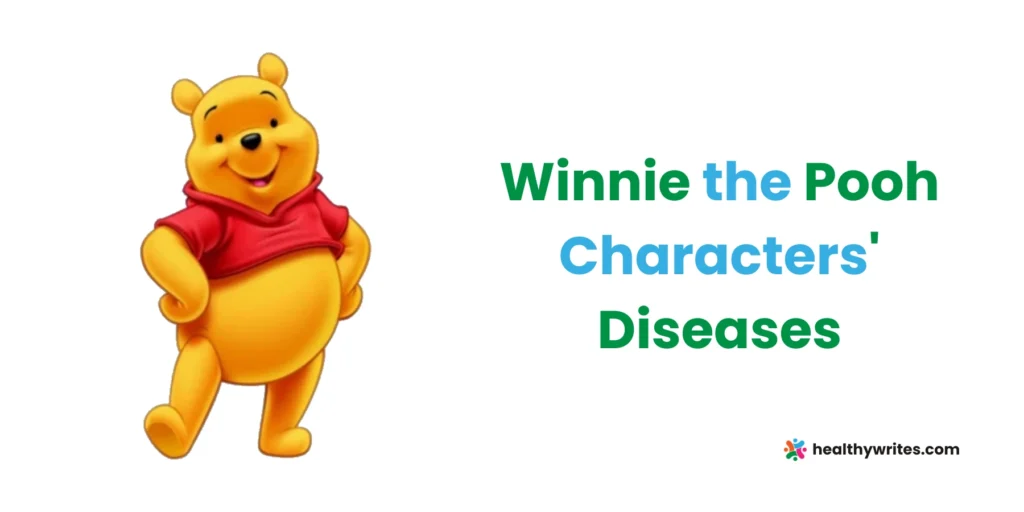
Winnie the Pooh, the honey-loving bear created by A.A. Milne, has captured hearts for nearly a century. Beyond the sweetness of the Hundred Acre Wood lies an intriguing theory — that each of the Winnie the Pooh characters may represent a different mental disorder, psychological trait, or emotional challenge.
Psychologists and fans alike interpret Pooh Bear’s forgetfulness, Piglet’s fear, and Eeyore’s sadness as reflections of real mental health struggles. These include Attention Deficit Hyperactivity Disorder (ADHD), anxiety, depression, Obsessive-Compulsive Disorder (OCD), and other emotional patterns. While these are fan-based interpretations and not official diagnoses, they provide a relatable and lighthearted way to discuss mental health awareness, emotional well-being, and neurodiversity.
Winnie the Pooh Characters Diseases Explained
| Character | Diseases | Psychological Traits |
|---|---|---|
| Winnie the Pooh | ADHD & OCD | Forgetfulness, obsession with honey, repetitive thoughts |
| Piglet | Generalized Anxiety Disorder (GAD) | Constant fear, worry, overthinking |
| Tigger | Hyperactive ADHD | Impulsivity, high energy, constant activity |
| Eeyore | Depression | Gloomy outlook, low motivation, pessimism |
| Rabbit | Obsessive-Compulsive Disorder (OCD) | Perfectionism, need for control, frustration with disorder |
| Owl | Narcissistic Personality Traits | Boastful, self-important, overconfident |
| Kanga | Anxiety / Overprotective Parenting | Worry for Roo’s safety, nurturing but controlling tendencies |
| Roo | Autism Spectrum Traits | Curiosity, social innocence, playful exploration |
| Christopher Robin | Symbolic Schizophrenia / Imaginative Traits | Vivid imagination, detachment, creativity |
1. Pooh Bear Psychological Disorders (ADHD & OCD Traits)
Winnie the Pooh exhibits behaviors that resemble Attention Deficit Hyperactivity Disorder (ADHD) and Obsessive-Compulsive Disorder (OCD). He is forgetful, impulsive, and overly focused on honey — traits that mirror mild ADHD. His repetitive thoughts about food and routine patterns reflect OCD tendencies. Despite these traits, Pooh demonstrates kindness, emotional simplicity, and resilience.
2. Piglet – Generalized Anxiety Disorder (GAD)
Piglet’s constant worry, trembling, and overthinking mirror Generalized Anxiety Disorder. His fears of everyday situations highlight the challenges of anxiety and the courage required to face them. Piglet’s behavior encourages empathy and awareness of anxiety in both children and adults.
3. Tigger – Hyperactive ADHD and Impulsivity
Tigger’s boundless energy, impulsivity, and constant bouncing exemplify hyperactive ADHD. While his enthusiasm is infectious, his character also reminds us of the importance of mindfulness and self-awareness to manage high-energy tendencies.
4. Eeyore – Depression and Low Self-Esteem
Eeyore represents depression through his gloomy outlook, low energy, and persistent sadness. His struggles show how depression can create isolation, but his friends’ support demonstrates the healing power of compassion, understanding, and connection.
5. Rabbit – Obsessive-Compulsive Disorder (OCD)
Rabbit reflects OCD traits with his obsession with order, perfectionism, and frustration when plans go awry. His character underscores the balance between control and flexibility in daily life.
6. Owl – Narcissistic Personality Traits
Owl exhibits narcissistic tendencies, boasting about his knowledge and emphasizing self-importance. While confidence is positive, Owl reminds us that empathy and humility must balance self-assurance.
7. Kanga – Anxiety and Overprotective Parenting
Kanga is nurturing but often overprotective of Roo. Her constant worry illustrates anxiety traits and the challenge of allowing loved ones independence while ensuring safety.
8. Roo – Autism Spectrum Traits
Roo displays curiosity, social innocence, and playful exploration. These behaviors have been interpreted as autism spectrum traits. Roo celebrates neurodiversity and emphasizes adaptability, learning, and acceptance.
9. Christopher Robin – Symbolic Schizophrenia / Imaginative Traits
Christopher Robin brings the stuffed animals to life through vivid imagination. Some symbolic interpretations liken this to schizophrenia-like traits, representing creativity, detachment, and imaginative exploration rather than a clinical diagnosis.
Why Understanding Winnie the Pooh Characters’ Mental Disorders Matters
These interpretations are not about official diagnoses but about exploring human emotions and psychological traits. Each character demonstrates aspects of mental health, emotional resilience, and neurodiversity.
- They break down stigma surrounding mental illness.
- They explain complex psychological patterns in a relatable way.
- They encourage compassion, empathy, and acceptance for emotional struggles.
FAQs about Winnie the Pooh Characters Diseases
What psychological disorder does Winnie the Pooh have?
Winnie the Pooh is commonly associated with ADHD and OCD due to distractibility, forgetfulness, and obsession with honey.
Are these disorders officially confirmed by A.A. Milne?
No, these are fan-based interpretations meant for educational and awareness purposes. A.A. Milne never confirmed these traits.
What disorder does Piglet represent?
Piglet represents Generalized Anxiety Disorder (GAD) because of his constant worry and nervousness.
Which character represents depression?
Eeyore represents depression through his persistent sadness, low energy, and negative outlook.
Which character shows ADHD traits?
Pooh Bear and Tigger display ADHD-related behaviors, including forgetfulness, impulsivity, high energy, and hyperactivity.
How do Winnie the Pooh characters help us understand mental health?
The Hundred Acre Wood teaches that everyone has emotional challenges. Through compassion, empathy, and understanding, we can support mental health and celebrate emotional diversity.
Final Thoughts
The mental disorders of Winnie the Pooh characters provide more than entertainment; they offer a unique window into human psychology and emotional resilience. Each character shows that quirks and challenges are part of being human, and that kindness, empathy, and understanding help in navigating mental health.