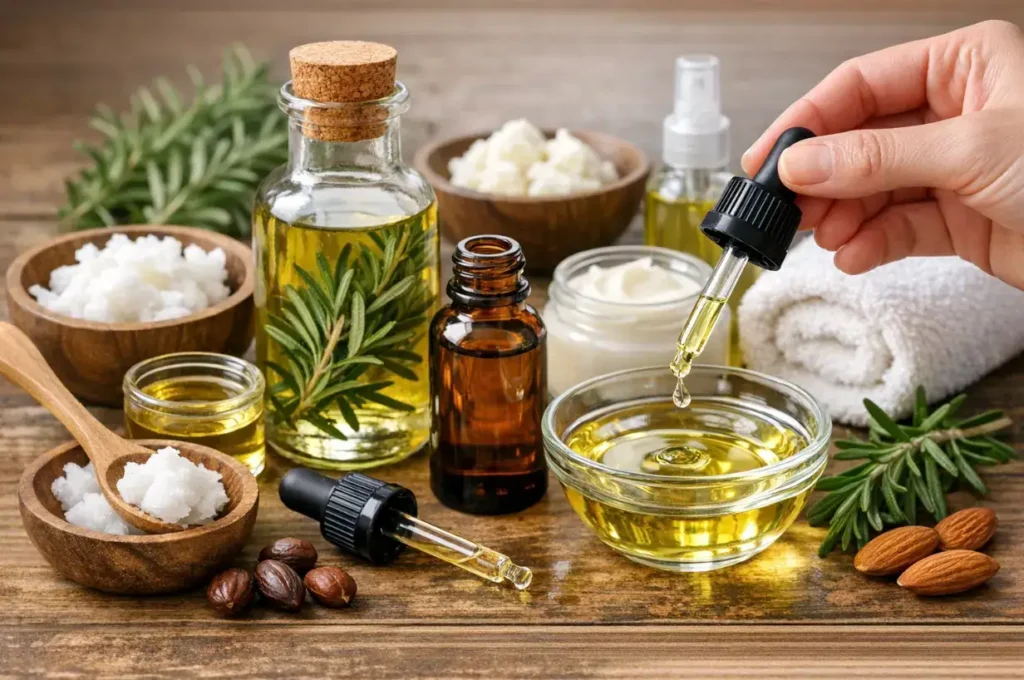
Rosemary pure essential oil offers many therapeutic benefits but is highly concentrated and can irritate if used undiluted. This guide focuses on safe, effective ways to dilute rosemary oil for both hair and skin, so you can enjoy its advantages while minimizing irritation.
In this guide, we’ll walk you through the safest and most effective ways to dilute rosemary oil, ensuring you can enjoy its benefits without risking irritation. For science-backed tips on boosting hair health from within, see 15 Best Foods for Healthy Hair Growth – Science-Backed Guide.
Why Dilute Rosemary Essential Oil?
Essential oils, like rosemary, are highly concentrated plant extracts, making them incredibly potent. While they offer a range of powerful benefits, they can also cause skin irritation or sensitivity, especially when applied directly to the skin or scalp.
Diluting rosemary pure essential oil with a carrier oil or other base helps reduce the risk of adverse reactions, ensuring it’s safe for topical use. Proper dilution maximises its effectiveness while protecting your skin and scalp from potential irritation.
Benefits of Rosemary Essential Oil
Before diving into how to dilute rosemary oil, let’s highlight its key benefits for hair and skin:
- Promotes Hair Growth: Rosemary oil improves circulation to the scalp, which can encourage hair growth and strengthen hair follicles.
- Soothes Dry Scalp: Its soothing properties help alleviate dry, itchy, and flaky scalps.
- Improves Skin Tone: Rosemary oil contains antioxidants that help fight signs of ageing and promote even skin tone.
- Antimicrobial Action: It may help reduce acne and blemishes by limiting bacteria on the skin.
How to Dilute Rosemary Essential Oil
Proper dilution ensures that you can safely use rosemary oil without risking skin irritation or sensitivity. Below are safe dilution methods for both hair and skin use.
1. Diluting Rosemary Oil for Hair Care
Using rosemary oil for your hair can stimulate follicles, promote growth, and improve scalp health.
Scalp Massage Blend
Ingredients:
- 3–5 drops of rosemary essential oil
- 1 tablespoon of carrier oil (such as coconut, jojoba, or argan oil)
Instructions:
- Combine the rosemary oil with the carrier oil in a small bowl.
- Massage the mixture gently into your scalp for 5–10 minutes.
- Leave it on for about 30 minutes before washing with shampoo.
This method improves circulation to the scalp and promotes healthier hair growth. For broader hair-health strategies, see 15 Best Foods for Healthy Hair Growth – Science-Backed Guide.
Hair Rinse
Ingredients:
- 2–3 drops of rosemary essential oil
- 1 cup of warm water
Instructions:
- Add the rosemary oil to the water and mix well.
- After shampooing, pour the mixture over your hair.
- Massage the scalp for a few minutes before rinsing.
This rinse helps balance scalp pH and adds shine to your hair.
2. Diluting Rosemary Oil for Skin Care
Rosemary oil can be a great addition to your skincare routine, helping reduce acne, improve skin tone, and fight signs of ageing.
Facial Oil Blend
Ingredients:
- 2–3 drops of rosemary essential oil
- 1 tablespoon of carrier oil (sweet almond, jojoba, or rosehip oil)
Instructions:
- Mix the rosemary oil with your chosen carrier oil.
- Apply a few drops to your fingertips.
- Massage gently into your face, avoiding the eye area.
For best results, apply this blend at night.
Spot Treatment for Acne
Ingredients:
- 1 drop of rosemary essential oil
- 1 teaspoon of carrier oil (tea tree or argan oil)
Instructions:
- Dilute the rosemary oil in the carrier oil.
- Use a cotton swab to apply directly to blemishes.
- Leave overnight and rinse in the morning.
This treatment may help reduce redness and inflammation. For acne basics and treatment options, see What is Acne Disease and its Treatment.
3. Diluting Rosemary Oil for Bathing
Adding rosemary oil to your bath can provide relaxation while promoting circulation.
Ingredients:
- 5–10 drops of rosemary essential oil
- 1 tablespoon of carrier oil or Epsom salt
Instructions:
- Mix rosemary oil with carrier oil or Epsom salt.
- Add the mixture to warm bath water.
- Soak for 15–20 minutes.
This bath blend helps relax your body and revitalise your senses.
Safe Dilution Ratios for Different Uses
| Use | Essential Oil Drops | Carrier Oil | Dilution Ratio |
|---|---|---|---|
| Scalp Massage | 3–5 drops | 1 tablespoon | 1–2% |
| Hair Rinse | 2–3 drops | 1 cup water | 0.5% |
| Facial Oil | 2–3 drops | 1 tablespoon | 1–2% |
| Spot Treatment | 1 drop | 1 teaspoon | 2–3% |
| Bath | 5–10 drops | 1 tablespoon or salt | 1–2% |
Essential Tips for Using Rosemary Oil
- Patch Test: Always perform a patch test before applying diluted rosemary oil to larger areas. Apply a small amount to the inside of your forearm and wait 24 hours to check for irritation.
- Avoid Sensitive Areas: Do not apply rosemary oil near the eyes, mucous membranes, or broken skin.
- Pregnancy and Health Considerations: If you are pregnant, nursing, or have medical conditions, consult a healthcare professional before using rosemary essential oil.
Conclusion
Diluting rosemary essential oil is an important step to ensure safe and effective use for both hair and skin. With the proper dilution, you can enjoy its many benefits—from promoting healthier hair growth to achieving clearer skin and relaxing bath treatments.
Remember, the right dilution not only maximises the oil’s effectiveness but also protects your skin and scalp from irritation.
For more evidence-based wellness guidance, you may also explore 15 Best Foods for Healthy Hair Growth – Science-Backed Guide.