Lung diseases can affect breathing in different ways. Two of the main categories are obstructive and restrictive lung diseases. Understanding the differences between these conditions is crucial for accurate diagnosis, management, and treatment.
What Are Obstructive Lung Diseases?
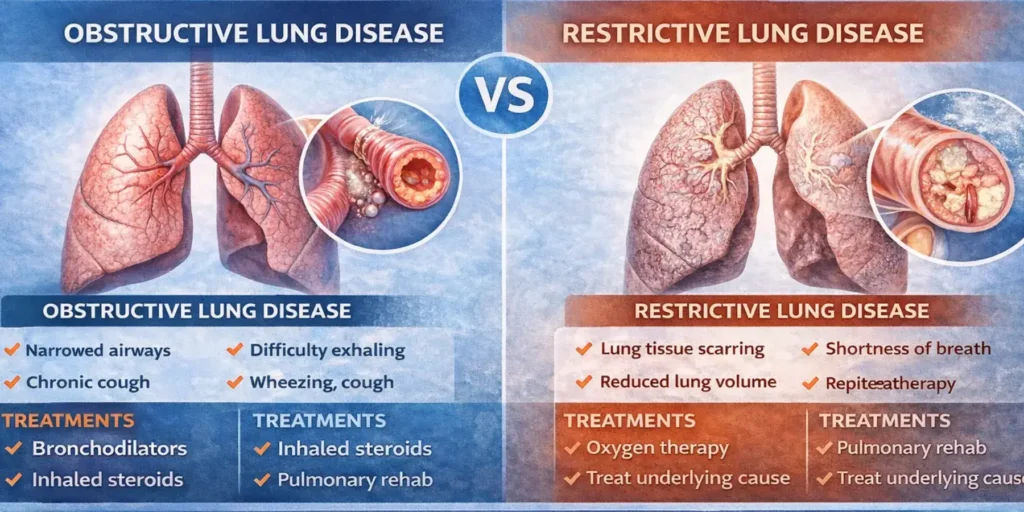
Obstructive lung diseases occur when airflow is blocked or slowed, making it difficult for air to leave the lungs. This leads to shortness of breath, wheezing, and chronic coughing.
Common Types of Obstructive Lung Disease
- Chronic Obstructive Pulmonary Disease (COPD) – Includes emphysema and chronic bronchitis, often caused by smoking.
- Asthma – A condition where airways become inflamed and narrow temporarily.
- Bronchiectasis – Permanent enlargement of parts of the airways, leading to chronic infections.
- Cystic Fibrosis – Genetic disorder causing thick mucus buildup that obstructs airflow.
Symptoms of Obstructive Lung Disease
- Shortness of breath, especially during exertion
- Chronic cough with mucus production
- Wheezing or whistling sound when breathing
- Chest tightness or discomfort
- Fatigue due to low oxygen levels
What Are Restrictive Lung Diseases?
Restrictive lung diseases occur when the lungs cannot fully expand, reducing lung volume. Unlike obstructive diseases, airflow is often normal, but the lungs cannot take in enough air.
Common Types of Restrictive Lung Disease
- Pulmonary Fibrosis – Scarring of lung tissue making it stiff and less elastic.
- Interstitial Lung Disease (ILD) – A group of disorders affecting the lung interstitium.
- Obesity-Related Restriction – Excess weight compresses the lungs, reducing capacity.
- Neuromuscular Disorders – Conditions like ALS or muscular dystrophy can weaken respiratory muscles.
- Scoliosis or Chest Wall Disorders – Structural problems that limit lung expansion.
Symptoms of Restrictive Lung Disease
- Shortness of breath during activity
- Rapid, shallow breathing
- Chronic fatigue
- Dry cough
- Weight loss in some chronic conditions
Key Differences: Obstructive vs Restrictive Lung Disease
| Feature | Obstructive Lung Disease | Restrictive Lung Disease |
|---|---|---|
| Main Problem | Airflow obstruction, difficulty exhaling | Lung expansion limited, reduced lung volume |
| Common Causes | Asthma, COPD, bronchiectasis, cystic fibrosis | Pulmonary fibrosis, ILD, neuromuscular disorders, obesity |
| Symptoms | Wheezing, cough, chest tightness | Shortness of breath, rapid breathing, fatigue |
| Tests | Spirometry shows reduced FEV1/FVC ratio | Spirometry shows reduced lung volumes but normal FEV1/FVC ratio |
| Treatment | Bronchodilators, steroids, pulmonary rehab | Oxygen therapy, pulmonary rehab, disease-specific treatment |
Diagnosis and Treatment
Diagnosis typically includes a combination of:
- Spirometry and pulmonary function tests
- Chest X-ray or CT scan
- Blood tests and oxygen saturation measurement
- Exercise testing for severe cases
Treatment depends on the type and severity:
- Obstructive disease: bronchodilators, inhaled steroids, pulmonary rehab, lifestyle changes (quit smoking)
- Restrictive disease: oxygen therapy, pulmonary rehab, treating underlying causes (fibrosis, obesity, neuromuscular disorders)
FAQs – Obstructive vs Restrictive Lung Disease
1. Can obstructive and restrictive lung diseases occur together?
Yes, some patients may have mixed patterns, especially with conditions like COPD combined with pulmonary fibrosis.
2. Which type is more common?
Obstructive lung diseases like asthma and COPD are more common worldwide.
3. Are both types reversible?
Obstructive diseases like asthma can be reversible with treatment. Restrictive diseases are often chronic and may not be fully reversible.
4. What lifestyle changes help manage these conditions?
Quitting smoking, regular exercise, maintaining a healthy weight, avoiding pollutants, and adhering to prescribed medications can improve lung function and quality of life.
5. When should I see a doctor?
If you experience persistent shortness of breath, chronic cough, or wheezing, see a healthcare provider promptly for evaluation.
Conclusion
Understanding the difference between obstructive and restrictive lung diseases is vital for effective management. While obstructive diseases mainly block airflow, restrictive conditions limit lung expansion. Early diagnosis, lifestyle changes, and following treatment plans can greatly improve breathing and overall quality of life.